Timberline Coffee School now offers green coffee grading and Q grading services from our lab in Calgary. Roasters, importers and producers can ship samples from anywhere in Canada or abroad and receive a full report from a licensed Q Grader within 7 to 10 business days of the coffee arriving. Pricing is in Canadian dollars.
People get coffee graded for a few common reasons. A roaster has a sample they like and a quote for a larger order, and wants an independent opinion before committing. An importer has a lot that just arrived and wants to confirm the coffee still matches the sample approved months earlier. A café owner or roaster knows their coffee is good and wants a score and tasting notes from a third party to support that when talking to customers. In each case, a grading report gives you a clear, independent answer you can share with others.
What the report contains
Grading follows the SCA Coffee Value Assessment, the current protocol used by Q Graders worldwide. The assessment has three parts, and you can order all three or only the parts you need.
Physical assessment. We assess the green coffee against the SCA green grading standard and record defect count, screen size, moisture content, density and colour. Problems from storage or shipping usually show up here, before the coffee reaches your roaster.

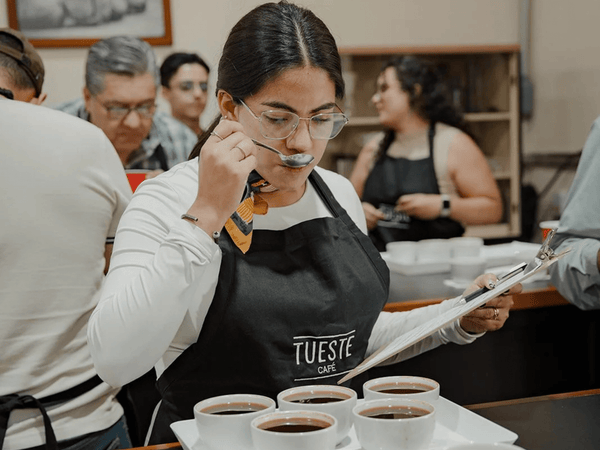
Descriptive assessment. We cup the coffee and record which flavours and aromas are present and how intense they are, using the Coffee Taster's Flavor Wheel vocabulary. The descriptive profile describes the coffee's character in language buyers already use.
Affective assessment. The affective assessment produces the quality score out of 100. Together with the physical and descriptive results, the score comes with the reasons behind the number.
The report is a PDF of around five pages. The layout is built from the components of the standard SCA forms, with explanations and annotations added so the results are clear whether or not you have read a CVA report before. There is a sample report on the grading page. Every coffee is graded by the same person, so results are comparable from one submission to the next.

Before you buy
Committing to a lot is a significant decision for a small roastery, and the decision usually rests on a sample and a cupping. A grading report gives you a second, independent read on the same coffee. The report adds measurements a cupping cannot produce, like moisture and density, along with a defect count and a score from someone with no stake in the sale. If the report agrees with your cupping, you can buy with more confidence. If the report raises something you missed, you have learned about the issue before placing the order.
Importers use the same service on landed lots. A coffee graded at origin months ago has since been shipped and stored, and a current assessment confirms what is in the bags before the lot goes on the offer sheet. The report also gives both parties a shared reference if a roaster later reports that a coffee does not match the sample.
After you buy

Many people who get a coffee graded already know the coffee is good. What they want is an independent assessment they can show to others.
Wholesale buyers, café owners and online shoppers increasingly look for a score when choosing a coffee. A score from a licensed grader, with the reasoning written out, carries more weight with those buyers than a number you assigned yourself. The descriptive assessment is useful in the same way. Tasting notes drawn from a structured assessment are more accurate than notes written from memory, and the descriptive profile gives you clear language when a customer asks what a tasting note means.
Roasters use the report for bag copy, sell sheets and product pages. Importers attach the report to offer sheets so roasters can see a current score and profile graded in Canada. Producers and exporters use the report when approaching Canadian roasters, so the quality question is answered before the first conversation.
How it works
- Order on the grading page. Choose your assessments and the number of coffees. Pricing drops automatically from five coffees up.
- We email you shipping instructions.
- Send 1 kg of green coffee per sample. Domestic shipments need no customs paperwork. International shipments are welcome, with any duty or brokerage passed through at cost. Sample roasting is included. We roast every sample in our lab so the roast level is correct for cupping, so please send green coffee only.
- Your report arrives by email within 7 to 10 business days of the coffee arriving at our lab.
All three assessments start at $330 per coffee, and the physical assessment on its own starts at $140, GST included. If you have a steady flow of samples, we offer monthly retainers at one agreed rate with priority turnaround. Email hello@timberline.coffee to set a retainer up.
Who is doing the grading
Every sample is graded by Trent Rollings, Timberline's founder and lead educator. Trent has worked in specialty coffee for more than fifteen years, including time in the Philippines and Turkey, and holds current SCA Q Grader and Q Instructor licences. He founded Timberline in 2023 as Calgary's first SCA certified training school, teaches the Q Grader course in Canada, and trains competition judges through the WCC Judge Skills Program.
Common questions
Can I send roasted coffee? No, the physical assessment needs green coffee, and we roast every sample in our lab so the roast level is correct for cupping. Roasting is included in the price.
How much do I send? 1 kg of green coffee per sample.
How long does it take? Reports are emailed within 7 to 10 business days of arrival, plus shipping time each way.
Do you accept samples from outside Canada? Yes, and any duty or brokerage is passed through at cost.
Can I publish the score? Yes. The score and everything else in the report belong to you, and you can use any of that content on packaging, sell sheets and your website.
How to order
Order your grading here. If you would rather learn to grade coffee yourself, the Q Grader course runs in Canada a few times a year, and the next dates are on the course page. For anything else, email hello@timberline.coffee.